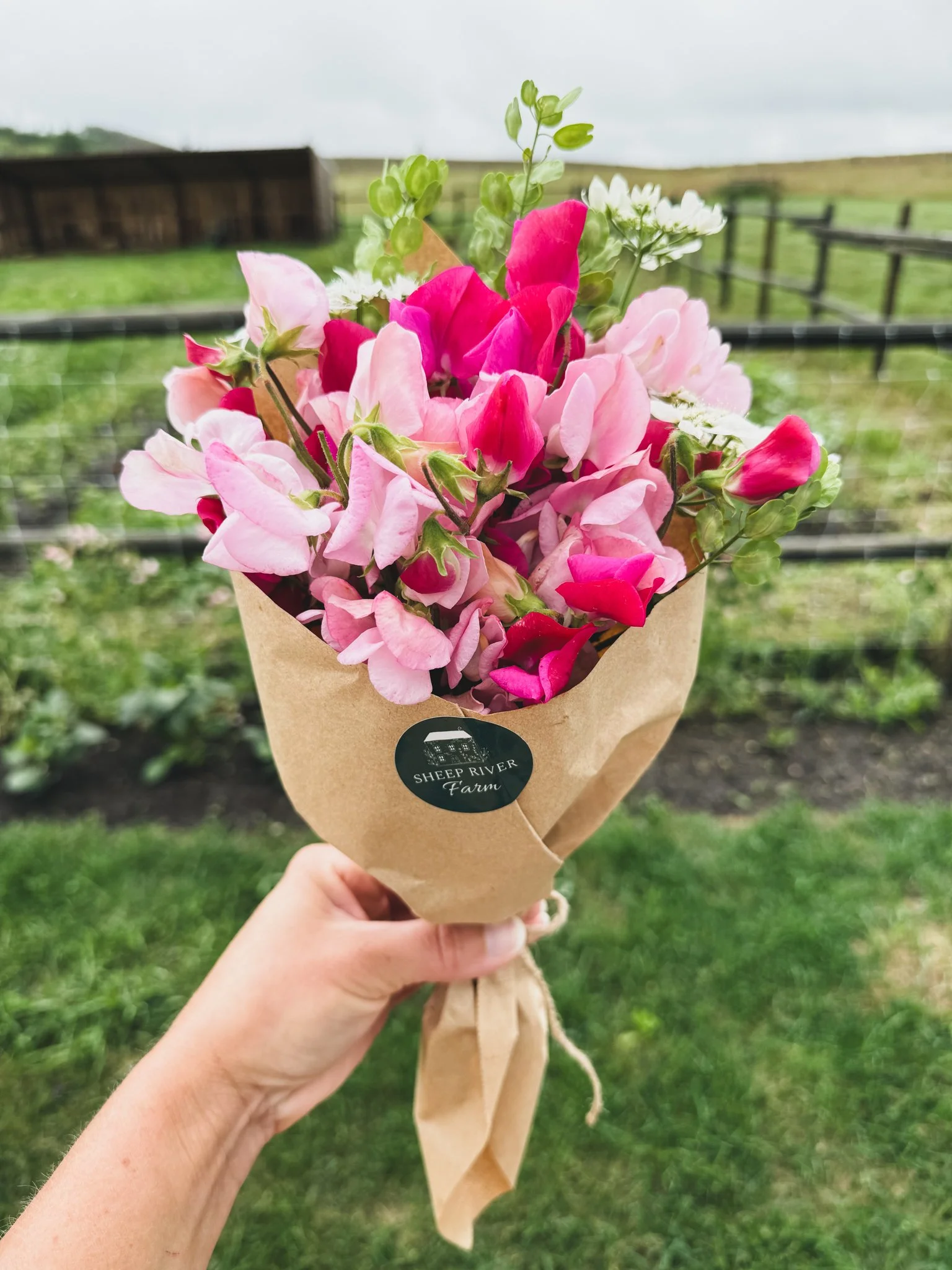
How to Grow Sweet Peas
Of all the flowers we grew in our flower patch last year, the most fragrant were sweet peas. It was such a delight to be greeted by their sweet fragrance every time we entered the gardens.
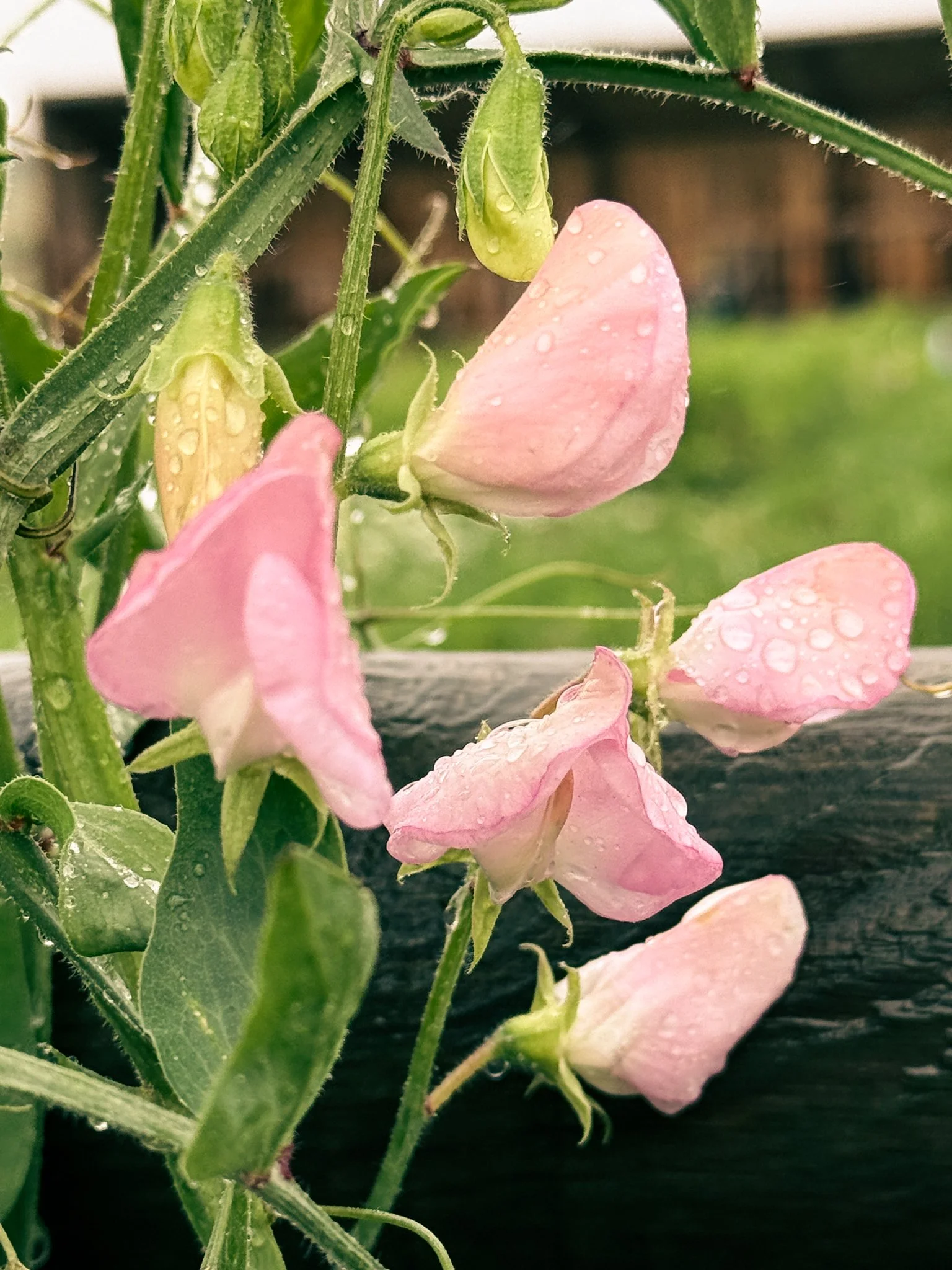
Aromatic, light pink Janet Scott sweet peas that grew at the entrance of our flower patch last summer.
They bloomed all summer long and the more we cut them the more they flourished. They also made the sweetest little posies, brightening up the kitchen windowsill and filling our home with a lovely aroma every day.
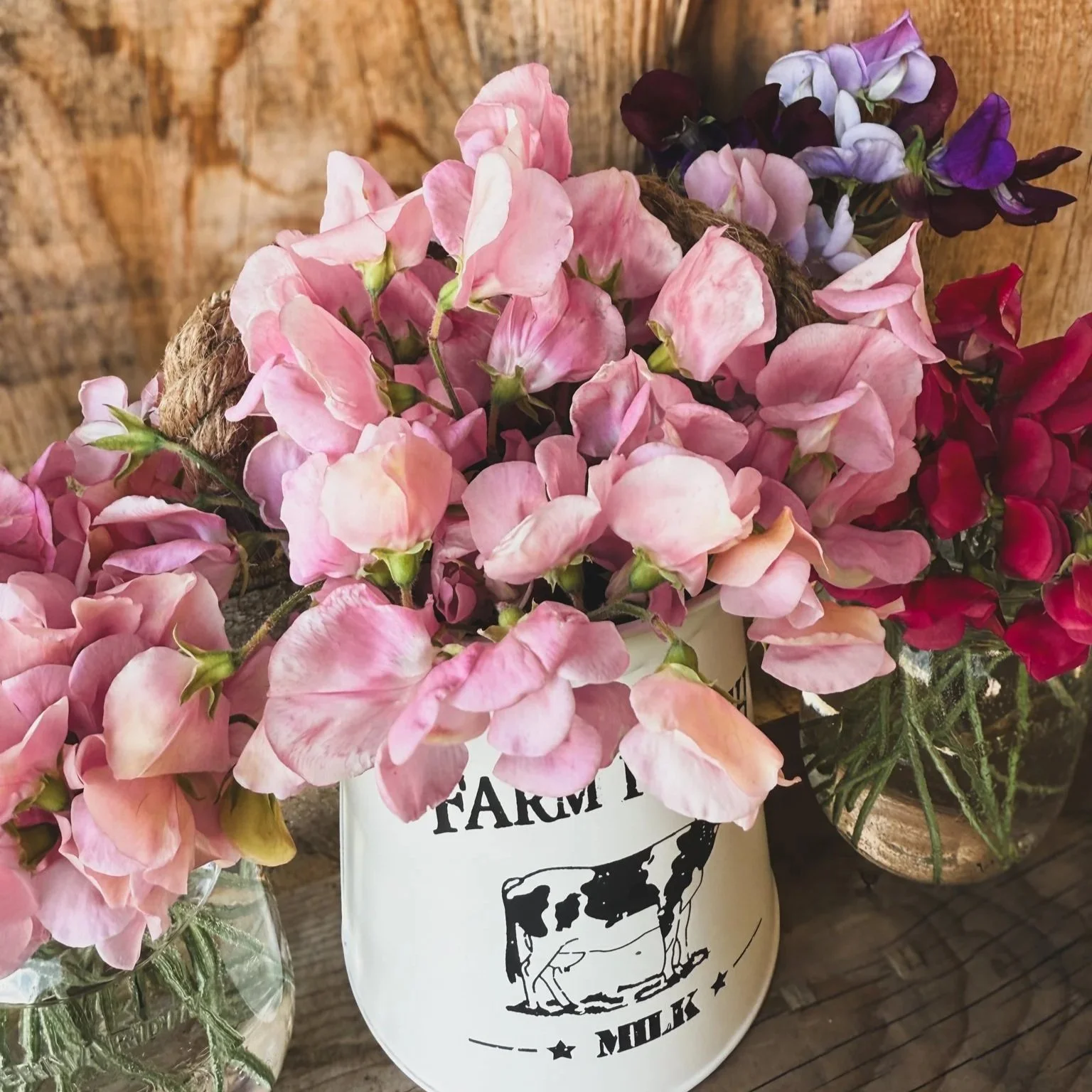
Janet Scott (light pink), Miss Wilmott (warm pink), Seafoam Mix (purple hues).
In plant hardiness zones 3 and 4, March is a good time to get seedlings started indoors. In warmer areas, they can be sowed directly outdoors in late winter or early spring. Sweet peas will take anywhere from 10 to 30 days to germinate, therefore don’t worry if you don’t see them spring up right away.
It is recommended to soak seeds in lukewarm water for 24 hours prior to sowing. This practice helps soften the seed coat and accelerates the germination process.
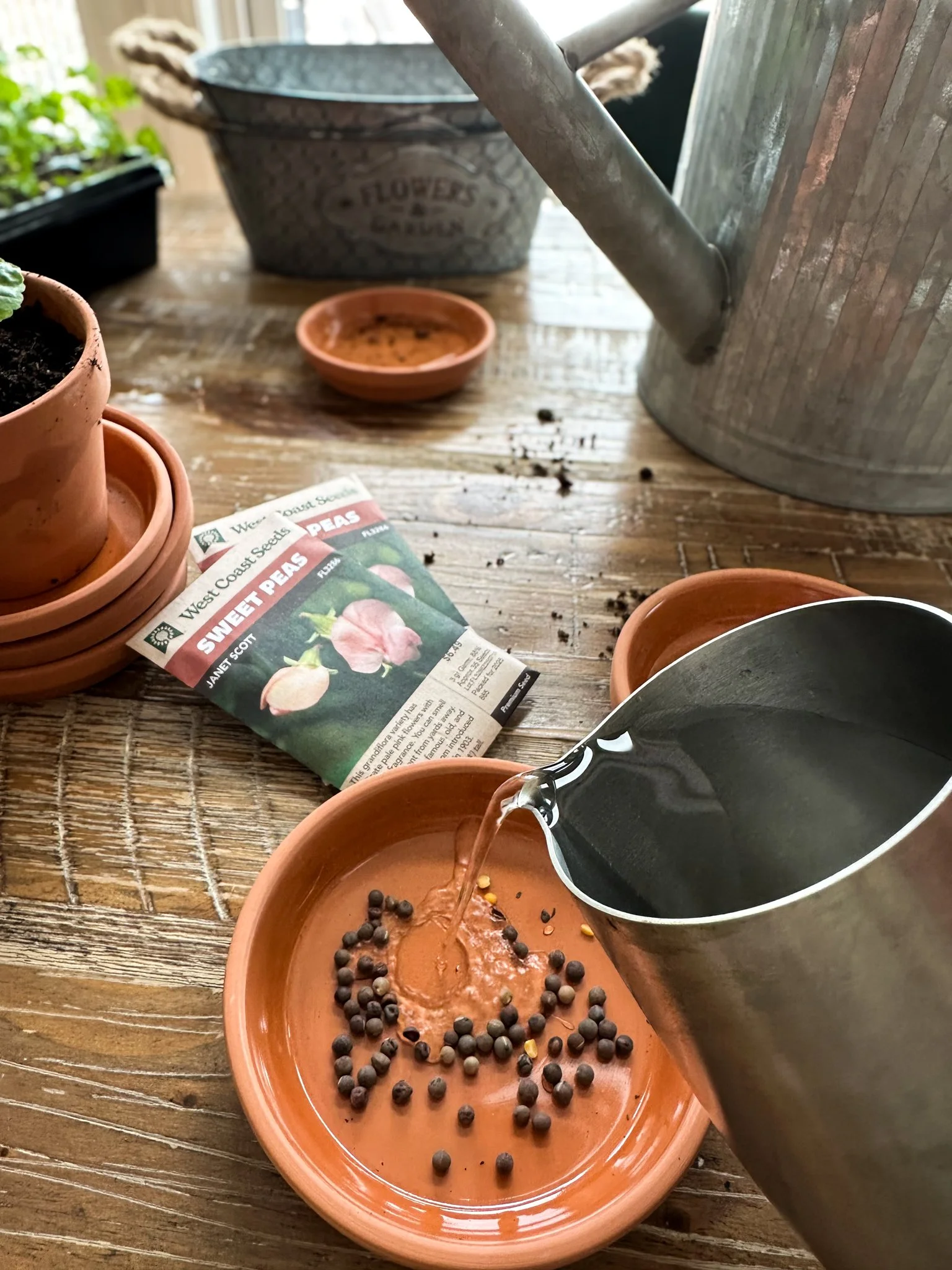
Soak sweet pea seeds for 24hrs before sowing, to soften seed coat and speed up germination.
Sow seeds ½ inch deep in 3-inch pots, or, if utilizing the soil blocking method, ensure each block measures at least 2 by 2 inches to provide adequate space and nutrients for optimal growth.
Place the seeds in a sunny location within your home, greenhouse or under grow lights, and cover them with a plastic dome to maintain humidity. Once most seedlings have sprouted, remove the dome.
To ensure vigorous, branching plants, pinch the seedlings when they’ve grown about 6 inches, leaving 2 to 3 sets of leaves.
Keep soil moist at all times, even after transplanting outdoors. They love sunshine and rich soil.
Prepare your garden area by incorporating well-aged manure or compost, as both significantly benefit sweet pea cultivation.
Plants tend to grow rapidly and will need a trellis to climb. We installed Tenax Hortnova netting along our fences and the vines quickly latched on to them!
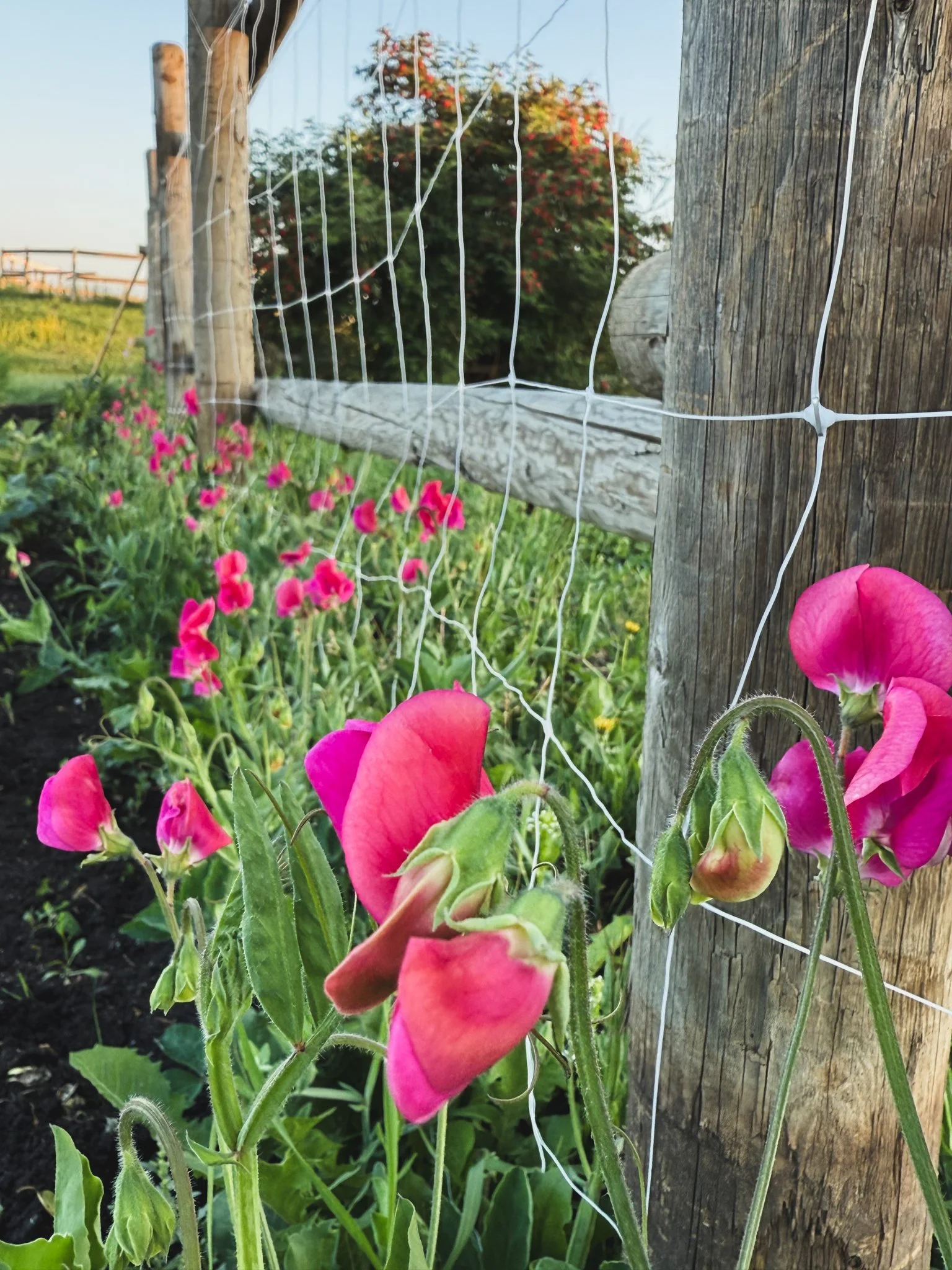
We stapled netting along the fence to provide a trellised space for the sweet peas to climb.
Once you’ve set up a trellised area and the final hard frosts have subsided, your sweet peas will be ready to be transplanted outdoors. Plant seedlings about 6 to 8 inches apart.
Harvest flowers regularly to stimulate abundant new blooms. Keep in mind, however, that all parts of this plant—including its seeds—are poisonous. Always be careful around children and pets.