
Even the smallest greenhouse can be a northern gardener’s best friend. Seeds can be sown early on, well before they can be started outdoors. Most seeds need plenty of warmth to geminate, and once sprouted, they’ll need protection from frost; a greenhouse provides the perfect environment to get your gardening season started early.
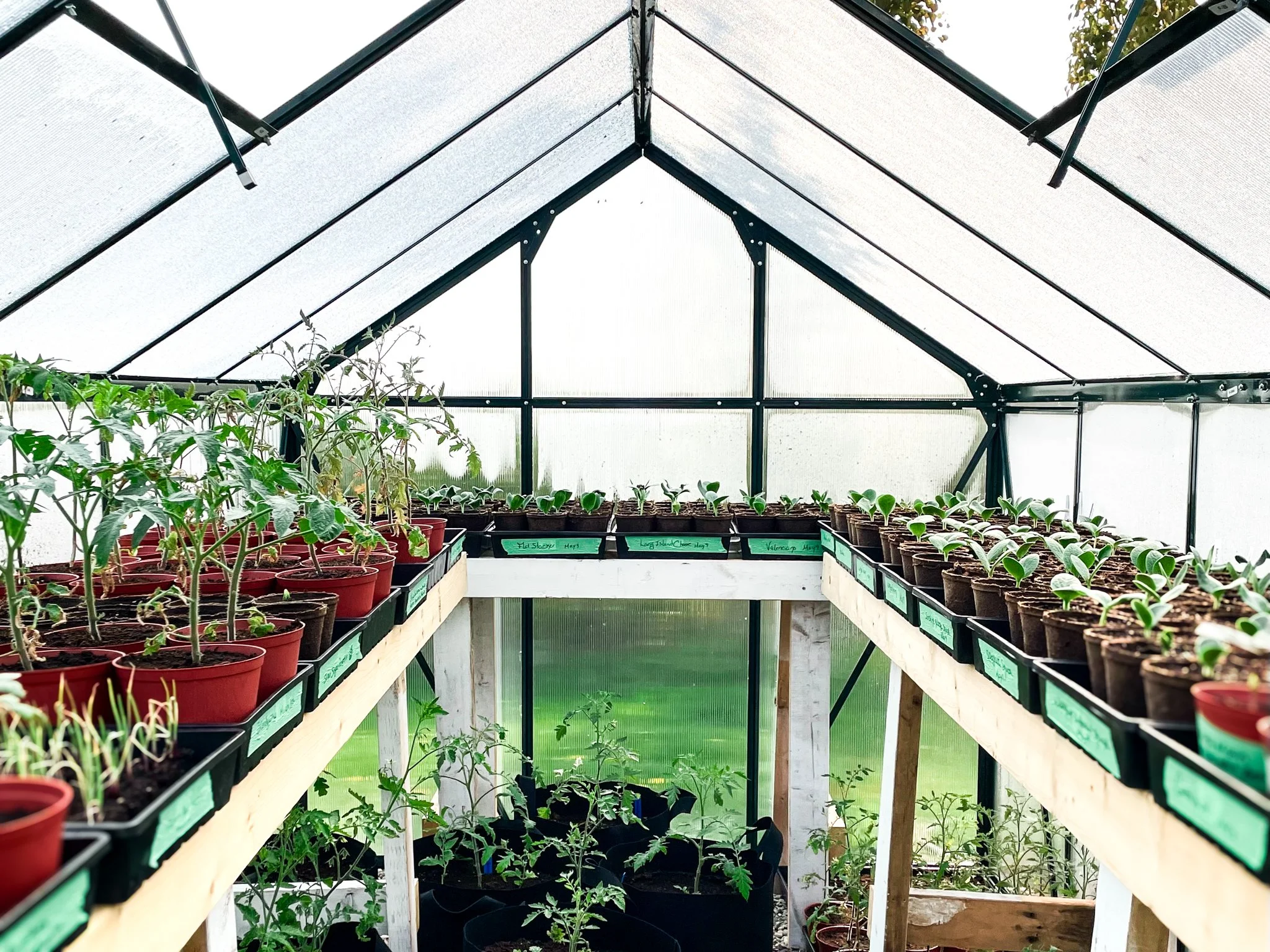
My first greenhouse, it was tiny. It measured 8’x10’, but I could fit tons of seedlings in it!
Start the season successfully by following these steps.
It’s always recommended to thoroughly clean your greenhouse before beginning a new growing season, especially if there have been diseased plants or pest infestations the previous year.
1. Clear dead plants and debris from beds and containers. If necessary, remove contaminated soil.
2. Remove anything that will not be useful in your greenhouse.
3. Clean pots and gardening tools with a natural disinfectant.
4. Wash the greenhouse's panels, windows, and doors. This task is typically performed on a warm day using a mop or cloth and soapy water. Rinse well with a garden hose and allow the area to dry by opening doors and windows.
5. Organize your space to make it efficient and easily accessible.
6. Apply compost and an organic or natural fertilizer to the soil several days before planting seeds or seedlings. This gives the fertilizer time to mix with the soil and helps protect young plants from fertilizer burn.
7. Monitor the weather to prevent extreme temperatures in your greenhouse, as they can be fatal to plants. On warmer days, open windows or doors early in the morning and close them at sunset to maintain good air flow and a comfortable environment.
Within plant hardiness zone 4, where we live, frost persists until early June. As our greenhouse is unheated, temperatures can get cold on spring evenings. Nevertheless, several crops—including kale, lettuce, spinach, radishes and cilantro—thrive in these cooler conditions; they may be sown in April and harvested prior to the onset of summer heat which will cause them to bolt.
In early May, tomato and pepper plants can be transplanted into the greenhouse, where they will grow successfully throughout the summer and into early autumn. During this same period, cucumber seeds may also be sown in the greenhouse to ensure optimal development.
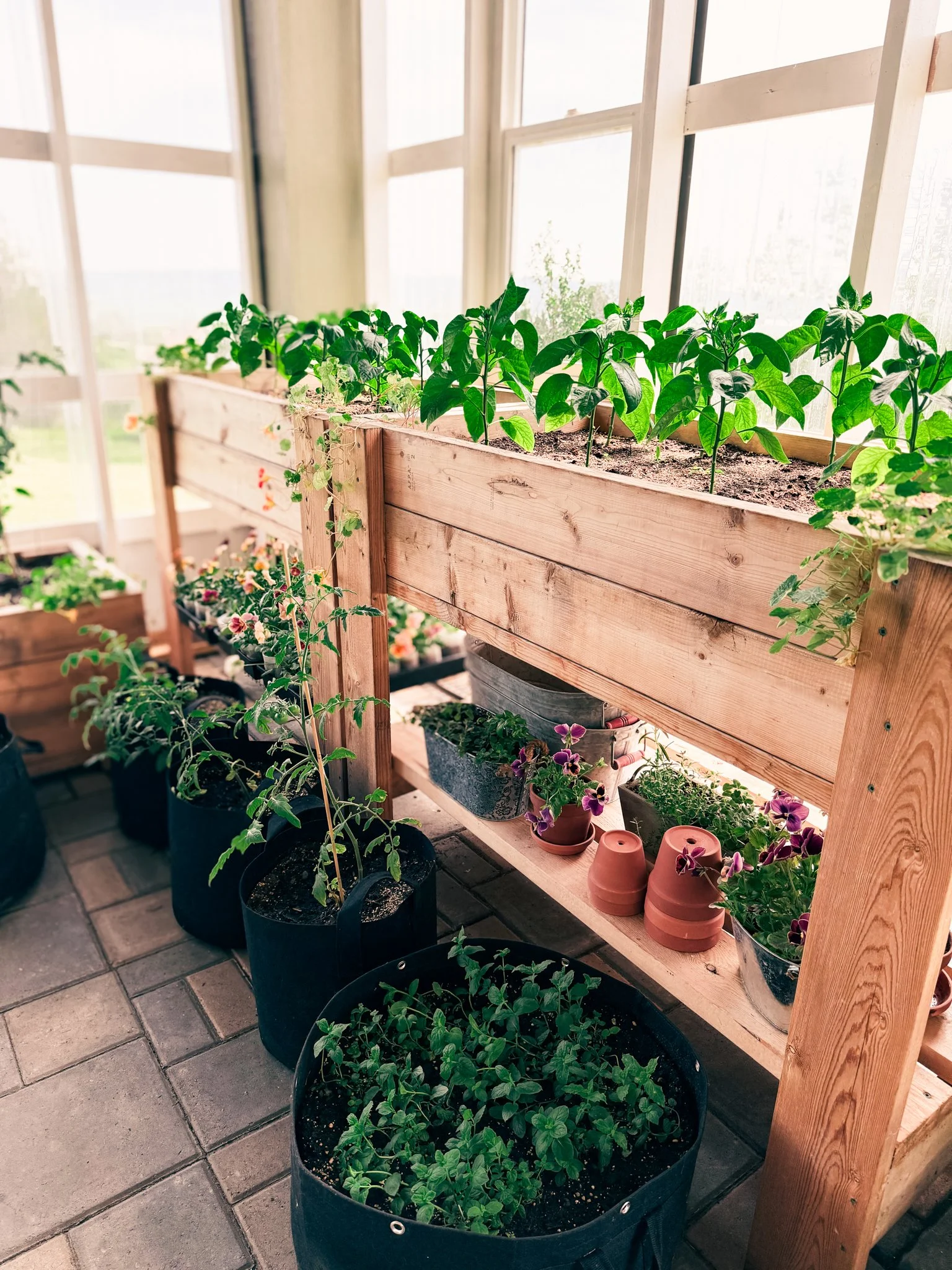
Pepper, tomato and cucumber plants need warmth and plenty of light, this makes them great candidates for greenhouse growing.
I love growing flowers in the greenhouse as well. They attract more pollinators into the space, and therefore enhance the pollination of tomato, pepper and cucumber plants.
Last year I grew nasturtiums among the vegetables as they offer many benefits such as protection from pests. These plants serve as a trap crop by attracting aphids and whiteflies, while deterring cucumber beetles.
Additionally, nasturtium leaves and flowers are both edible and nutritious; their peppery taste makes them a great addition to salads or as an attractive garnish for various dishes.
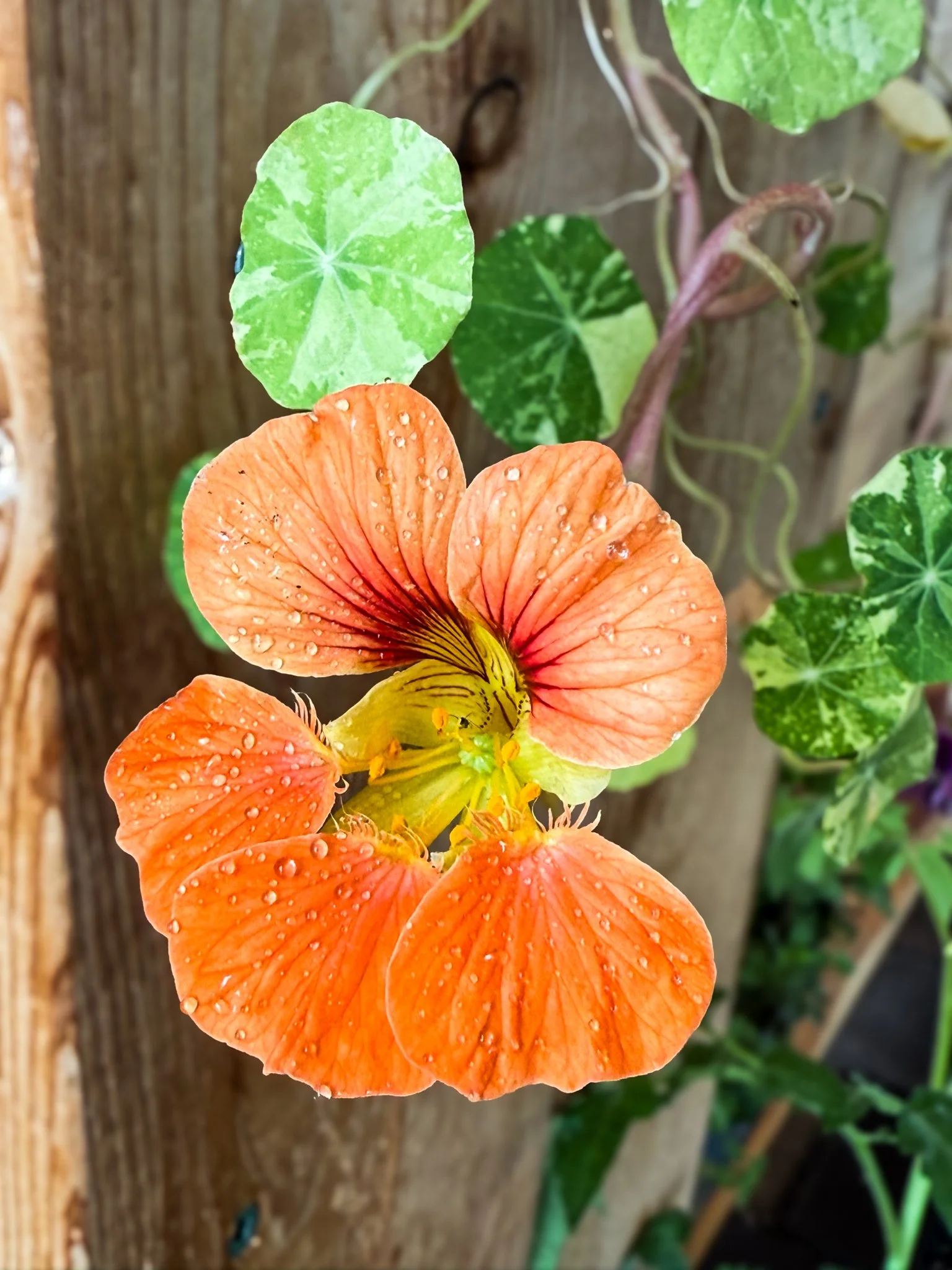
‘Tip Top Alaska Salmon’ nasturtiums planted alongside peppers and tomatoes in the greenhouse.
Pansies were another edible flower I cultivated in our greenhouse. Since they thrive in partial shade, I placed them on shelves under the raised beds, which also encourages longer stems—making them perfect for floral displays.
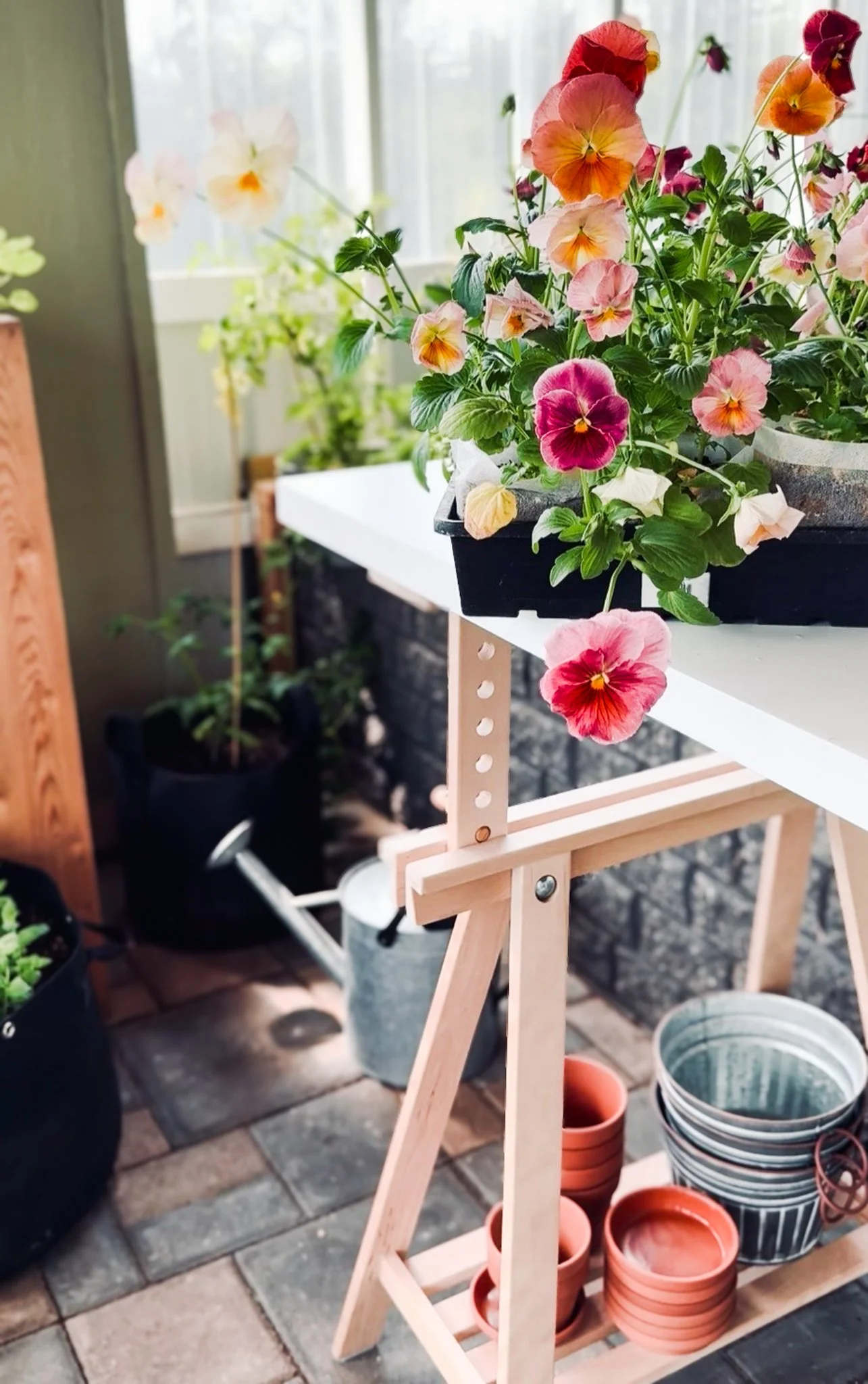
‘Imperial Antique Shades’ pansies grown in the greenhouse last spring.