
How to Grow Snapdragons in Zone 3
Snapdragons have always captivated me with their distinctive appearance and vivid range of colours. It was a breathtaking scene last summer when the varieties we planted in our cut flower patch were all in bloom, flaunting everything from gentle pinks to bold copper hues.
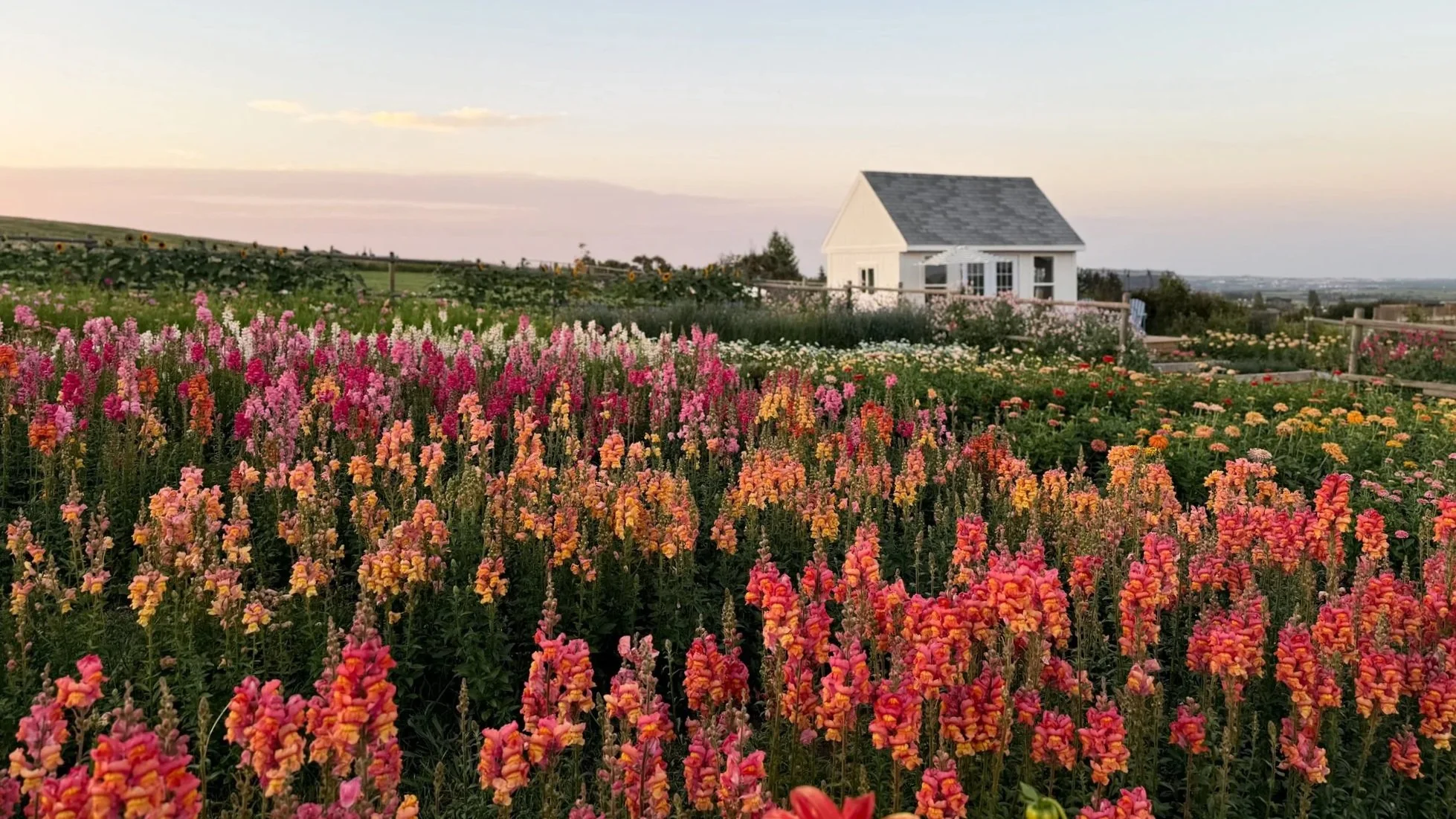
Our 2025 snapdragon planting in the flower patch.
While it takes patience to start them from seed, once they’ve germinated, it’s practically smooth sailing from there on. I find them perfectly suited to our climate (plant hardiness zone 3) since they’re frost and drought tolerant once established, and deer seem to avoid them, as well as other critters, making them a low maintenance cut flower.
Snapdragon bloom quality is significantly influenced by day length, light intensity, and temperature and plant breeders categorize varieties into groups numbered 1 through 4. These numbers help determine the variety to choose for a specific climate and time of year. Numbers 1 and 2 are best suited for shorter day length and cooler periods such as spring or fall plantings — flowers that will be either grown in a greenhouse or cultivated in warmer climates.
We mostly grow group 3-4 varieties which are suited for lots of light, warmer temperatures, and long days, since our flowers are field grown. Other varieties, best suited for spring or fall blooms, would simply stop producing flowers or grow fragile, lanky stems under these conditions.
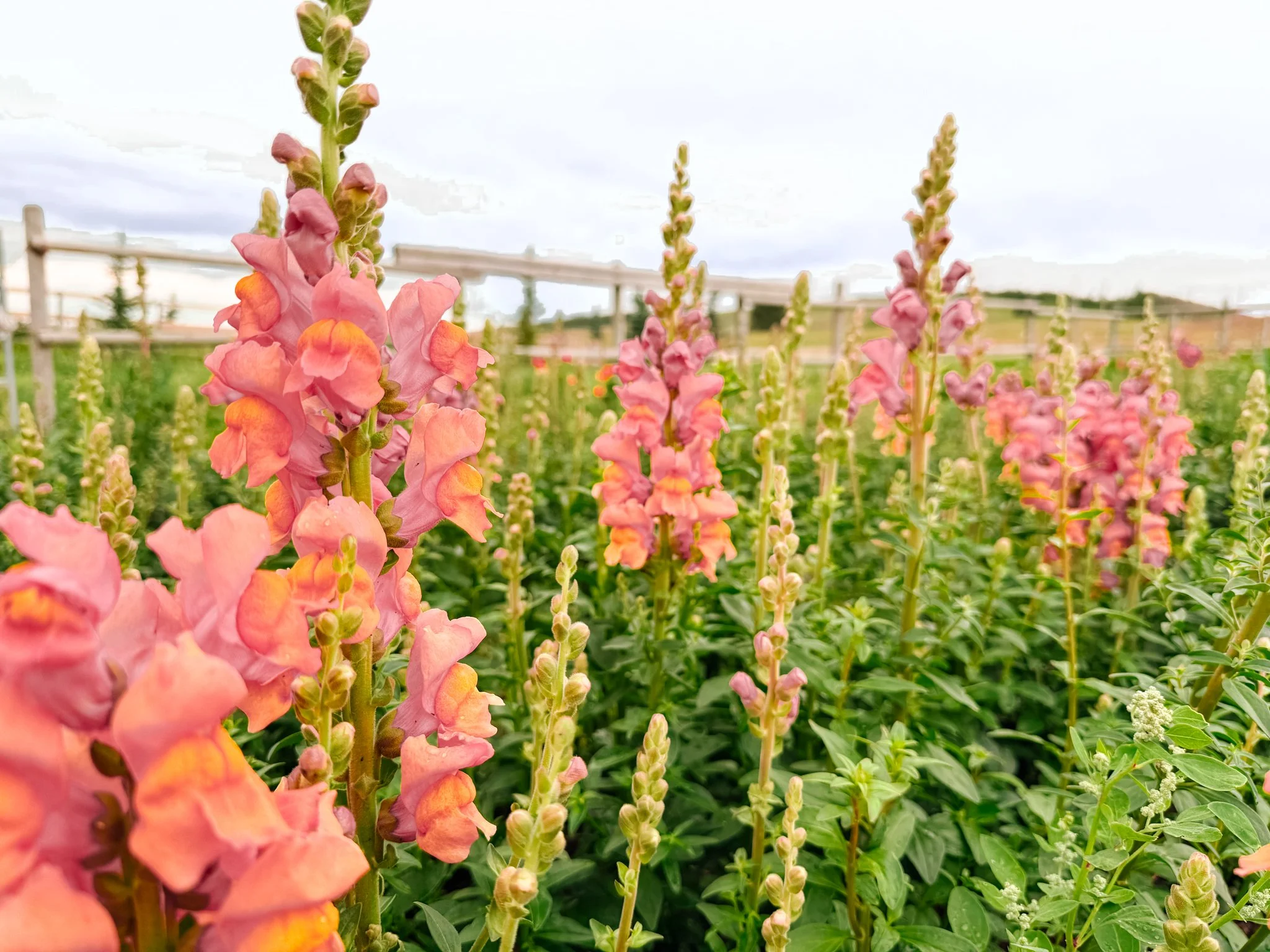
Cannes Light Bronze Snapdragons Group 2-3
Snapdragons require 110 to 120 days to mature and considering our short growing season, seeds must be started indoors, under grow lights 8 to 10 weeks before transplanting outdoors, and we start our seedlings usually around February 15th.
Start by preparing your growing medium, then gently place a few seeds on the surface without covering them with soil. Since the seeds are extremely small, I find it helpful to use pointed tweezers to sow them. Seeds may be lightly covered with vermiculite to keep them in place and minimize algae growth on the soil. To avoid disturbing the seeds, either mist the soil with a spray bottle or water from below. Placing a dome over the container will help speed up germination. When seedlings emerge, remove the dome and continue to keep them well-hydrated.
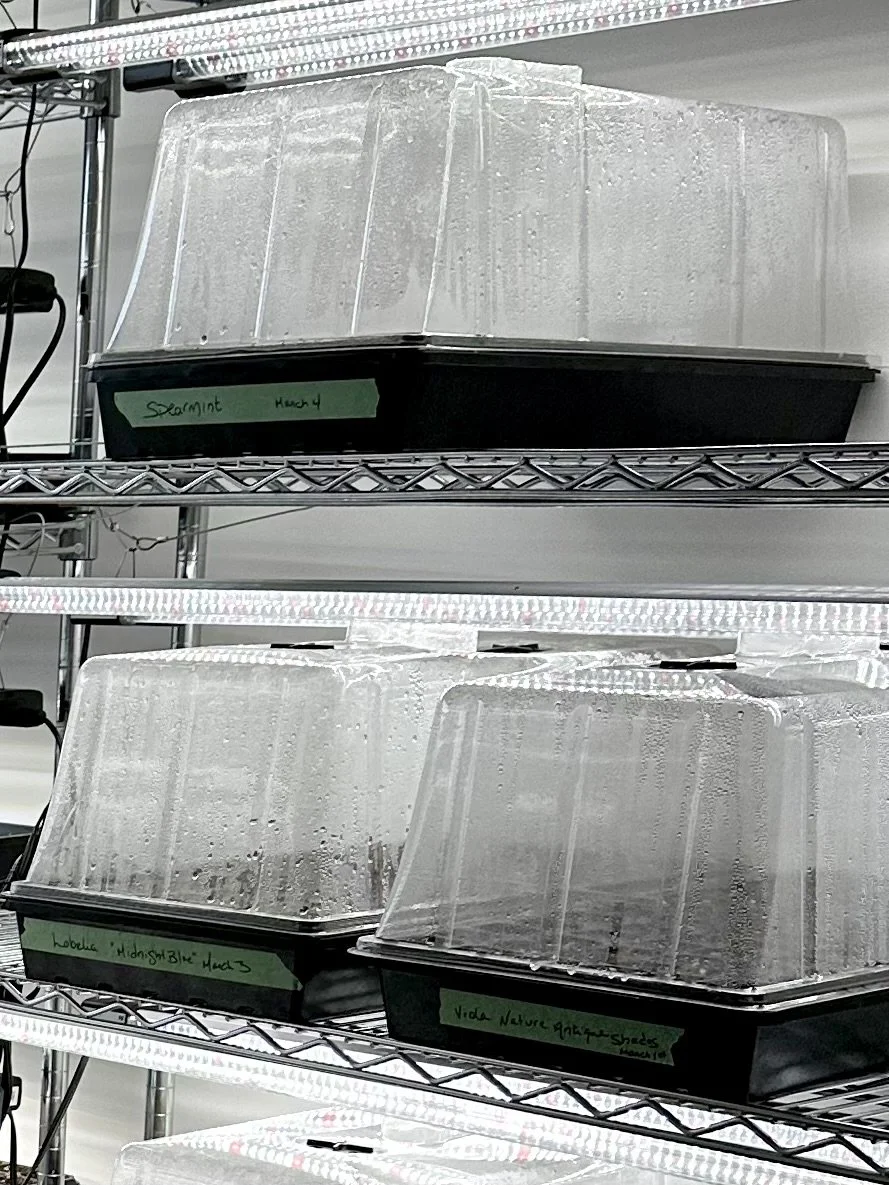
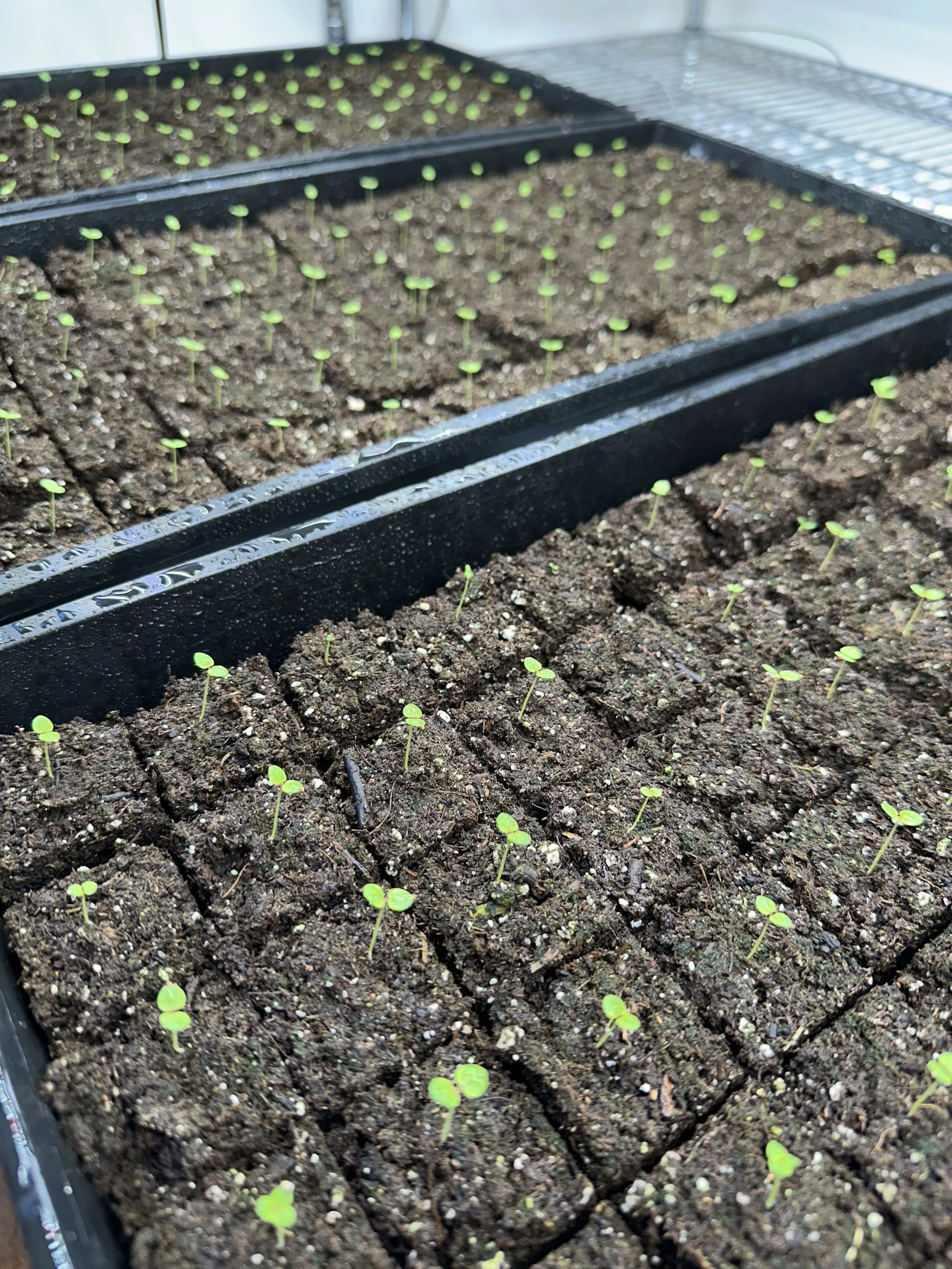
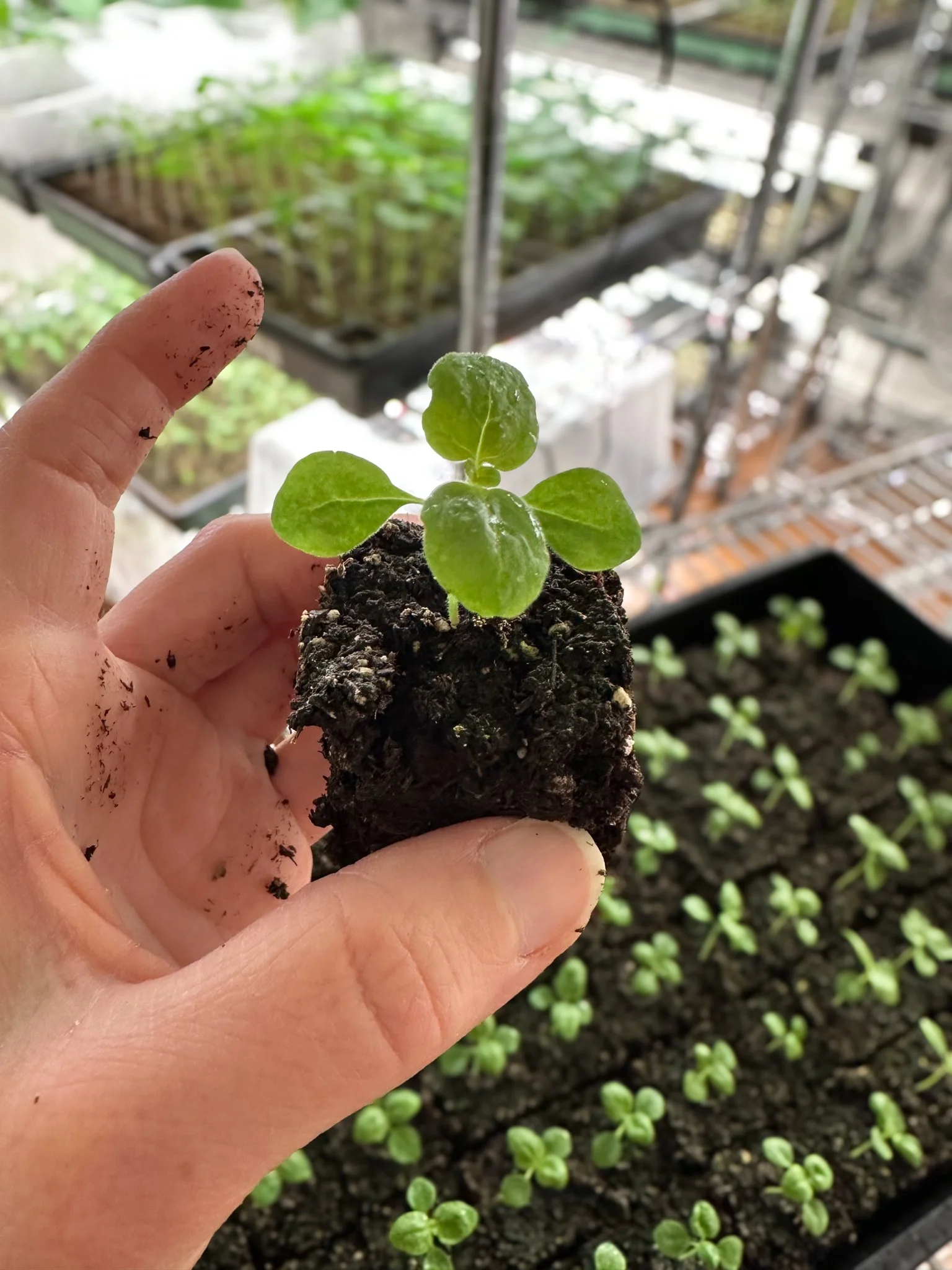
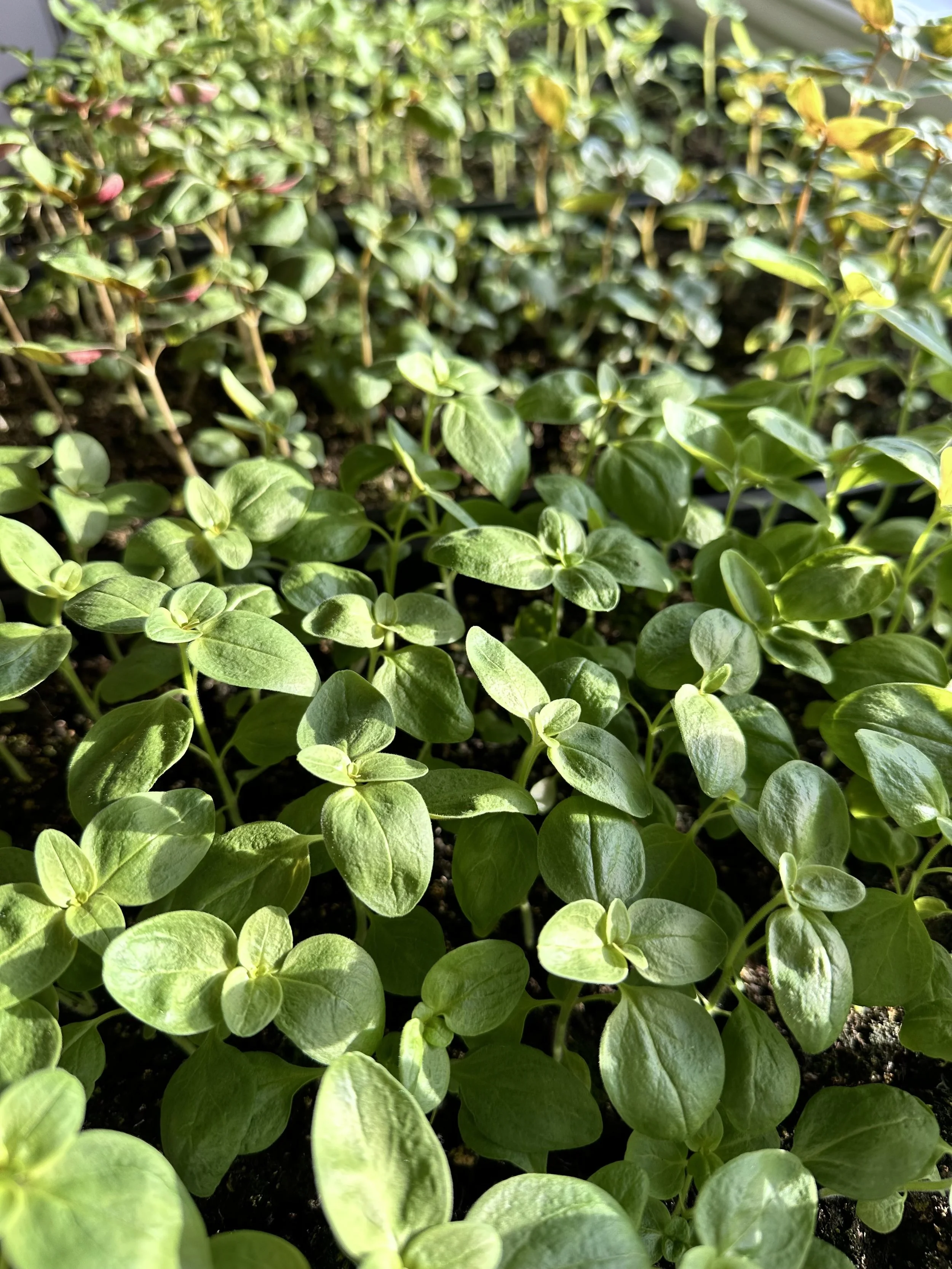
Snapdragons germinate within 7 to 14 days and seedlings are tiny. A few weeks after sowing seeds, apply fertilizer—we prefer an organic liquid fertilizer such as Marphyl soil enhancer — which does smell bad, but works wonders!
We typically move our snapdragons outside in early to mid-May, once they’ve been properly hardened off and the risk of hard frost has passed, as young seedlings remain somewhat sensitive to cold temperatures.
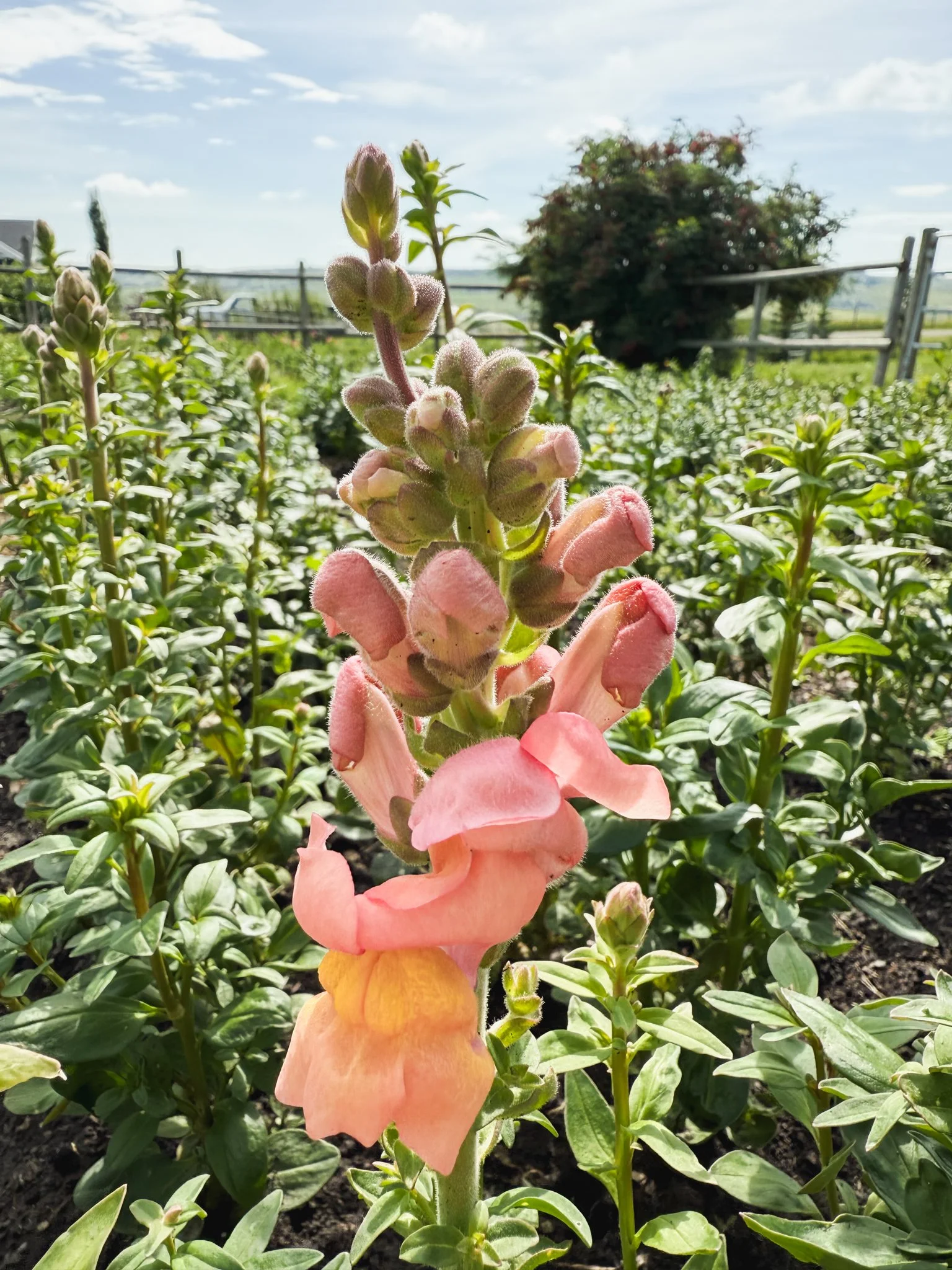
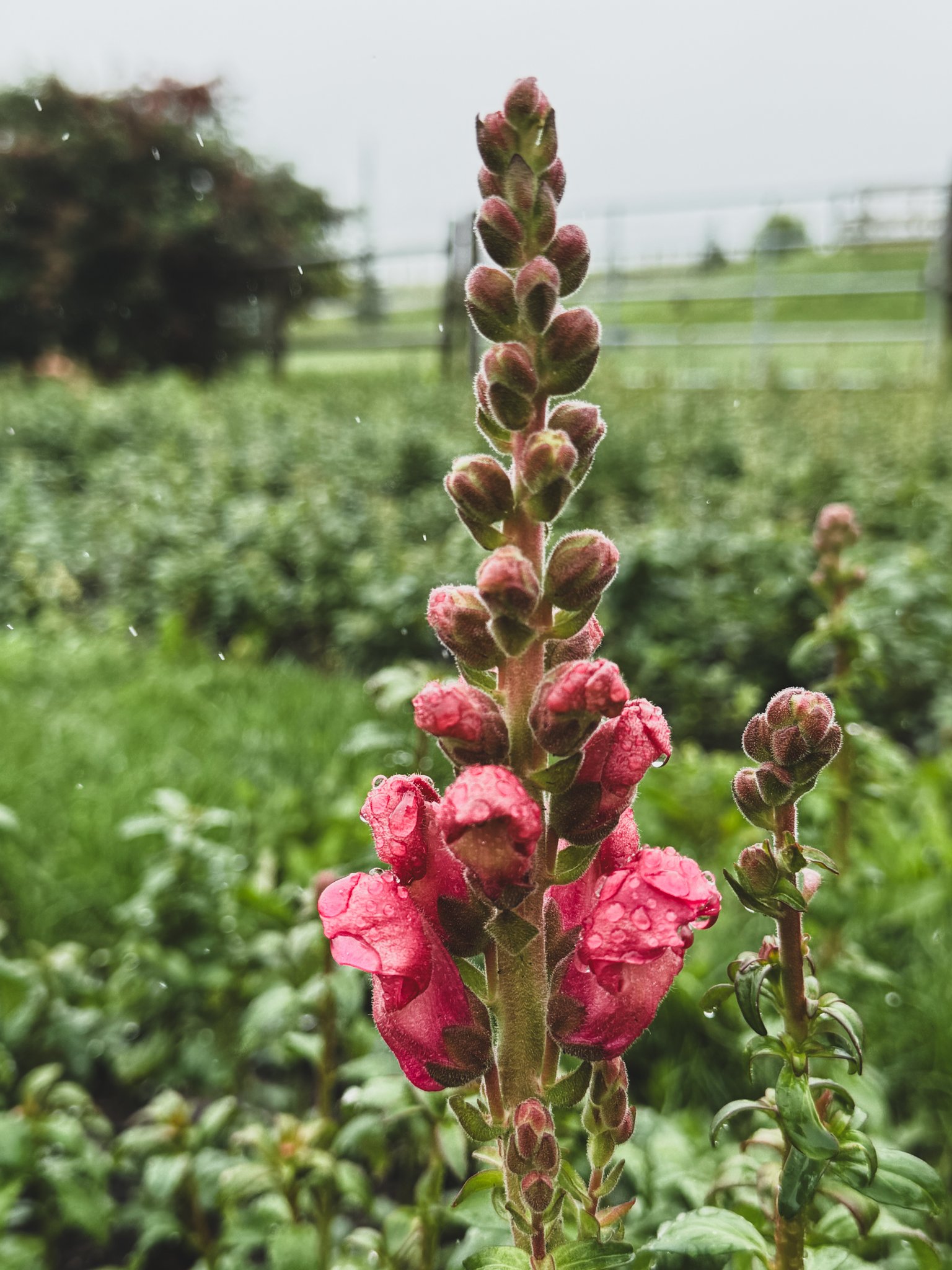
Once established, snapdragons are very hardy and can tolerate cold nights and light frosts. They do well when it’s dry and only require watering every few days.
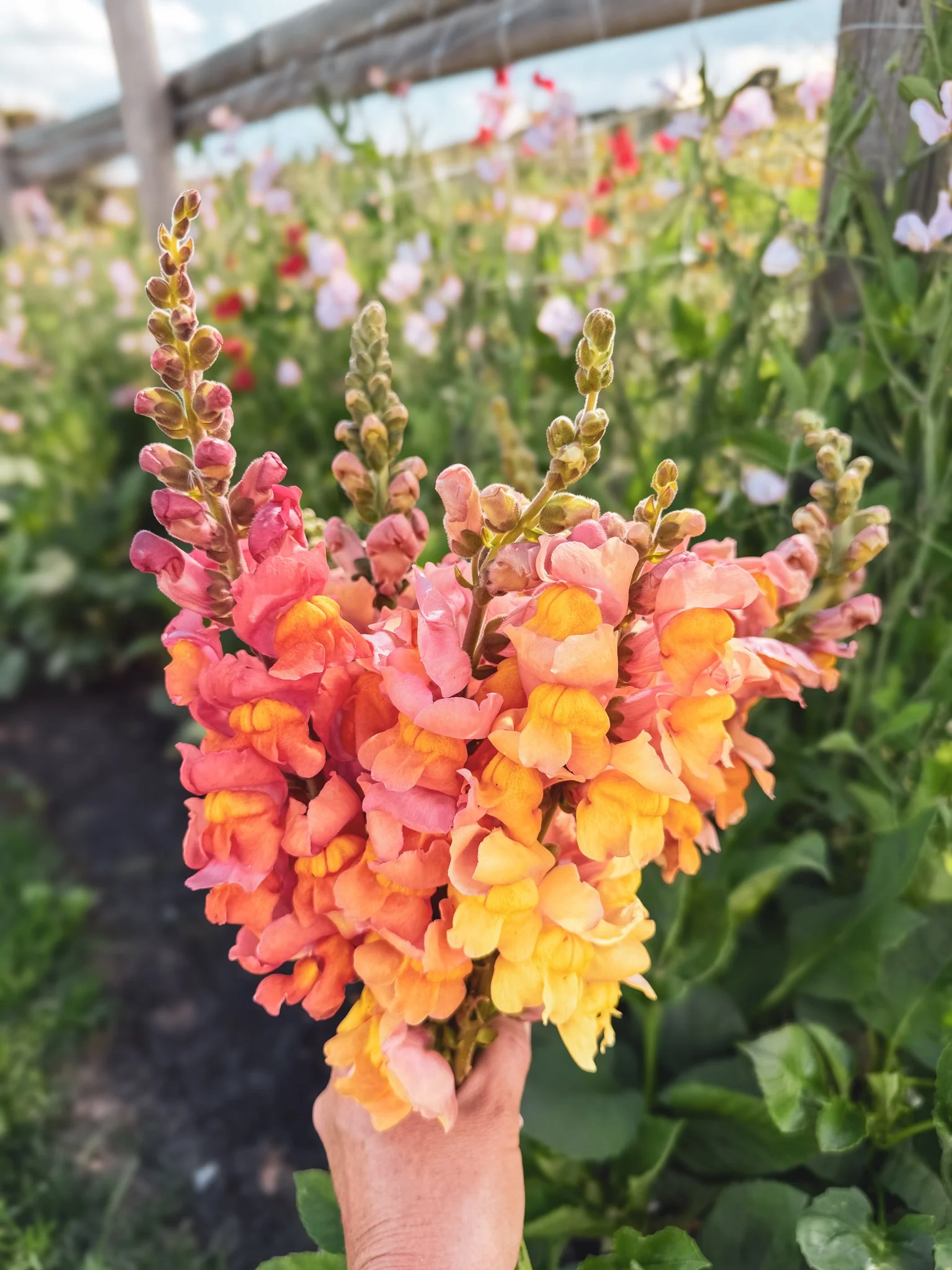
Potomac Orange Snapdragons (left) Cannes Light Bronze (right).